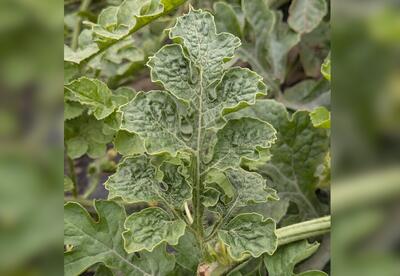


Figure 1. Interveinal chlorosis on cucumber leaves (unknown etiology)
Agdia, Inc. is happy to announce the commercial launch of a field-deployable rapid molecular test kit on their AmplifyRP® XRT platform for dual onsite detection of Beet pseudoyellows virus (BPYV) and Strawberry pallidosis-associated virus (SPaV).
For growers who prefer to send plant samples to Agdia for analysis, this product will also be used by their Testing Services diagnostic laboratory, where customers receive expert guidance on crop screening and rapid turnaround time of test results.
Beet pseudoyellows virus (BPYV)
Beet pseudoyellows virus is a plant pathogenic virus in the Crinivirus genus (Closteroviridae family) and it is the causal agent of 'cucumber yellows' and 'muskmelon yellows'. While over 30 species of plants from various families are considered susceptible to infection, BPYV is best known for causing significant economic losses in cucurbit greenhouse production (cucumber, melon/cantaloupe, squash, etc.) Other notable susceptible species include strawberry, lettuce, carrot, spinach, beet and multiple ornamental species.
The virus is transmitted in a semi-persistent manner by the greenhouse whitefly (Trialeurodes vaporariorum). It is not transmitted through seed and has only been shown to be mechanically transmitted in a lab setting.
Symptoms of BPYV include chlorotic (yellow) foliar spots, stunting and interveinal chlorosis of older leaves. Areas with interveinal yellowing eventually display thickening characteristics and become necrotic.
Interveinal chlorosis caused by BPYV closely mimics visual symptoms of nutrient deficiency (i.e., magnesium). Such symptoms can also be mistaken for those caused by other cucurbit-infecting viruses transmitted by aphids, thus highlighting the importance of incorporating molecular diagnostics into growing operations to accurately inform pest management strategies. Such strategies include insecticide applications, insect netting and removal of infected plant material.
Strawberry pallidosis-associated virus (SPaV)
Strawberry pallidosis-associated virus (SPaV) is another viral species from the Crinivirus genus that is best known as a causal agent of virus decline of strawberry. This viral species has a narrower host range than BPYV. Susceptible hosts are limited to species closely related to strawberry in addition to several other weed species.
The greenhouse whitefly (Trialeurodes vaporariorum) is the primary transmission vector of SpaV.
Strawberry plants infected with SPaV alone are typically symptomless until infected with another virus. This can result in confusion when trying to correlate specific virus infection with vector populations. If plants are infected with SPaV by whiteflies early in their growth cycle, the same vector may not be present when a secondary infection (such as aphid-transmitted viruses) occurs and disease symptoms first become visible. Such symptoms include: red- or purple-colored leaves, stunting, fragile roots with reduced absorption characteristics and significantly reduced fruit production.
As with other Criniviruses, symptoms of infection are similar to those observed with nutrient deficiency and other diseases, which makes visual diagnosis unreliable.
Effective clean stock programs rely heavily on whitefly exclusion and regular diagnostic testing to ensure clean mother stock.
Extensive validation studies were conducted to demonstrate fitness for purpose of the new rapid, field-deployable molecular assay developed by Agdia for dual detection of BPYV and SPaV:
Validation summary for BPYV detection:
- Diagnostic specificity is 100% (243 out of 243 true negatives detected). No cross reactivity was observed with other pathogens tested during product validation.
- The new assay successfully detected 151 out of 159 positive samples, resulting in a diagnostic sensitivity of 95%.
Validation summary for SPaV detection:
- Diagnostic specificity is 100% (255 out of 255 true negatives detected). No cross reactivity was observed with other pathogens tested during product validation.
- The new assay successfully detected 154 out of 157 positive samples, resulting in a diagnostic sensitivity of 98.1%.
To view the full validation report, see the "Technical Information" tab on the product page.

Figure 2. Pair the new test with Agdia's AmpliFire® Pro portable isothermal fluorometer (coming soon!)
About AmplifyRP®
Agdia’s new AmplifyRP® XRT assay for the detection of BPYV and SPaV is based on recombinase polymerase amplification (RPA). This technology promotes the rapid amplification and detection of nucleic acid targets, DNA or RNA, while maintaining a single operating temperature of 39–42 °C.
AmplifyRP® products achieve sensitivity and specificity comparable to PCR, while having clear advantages over the lab-based technology. AmplifyRP® products do not require a nucleic acid purification step; crude sample extracts are prepared using a simple extraction buffer and tested directly. When paired with Agdia’s AmpliFire® Pro isothermal fluorometer (Figure 2, coming soon!), the AmplifyRP® system is a user-friendly tool that can be implemented in the field or the lab by personnel with limited experience in molecular diagnostics. Total assay time is less than 30 minutes when used with the AmpliFire® as a real-time assay.
About Agdia
A leading provider of diagnostic solutions for agriculture, Agdia, Inc. has been serving plant breeders, propagators, growers, universities, and private testing laboratories since 1981. The company offers a comprehensive portfolio of validated, easy-to-use diagnostics for identifying plant pathogens, hormones, and transgenic traits. In addition, Agdia operates an ISO accredited, in-house, testing services laboratory. Agdia’s quality management system is ISO 9001:2015 certified and their Testing Services Laboratory is ISO/IEC 17025:2017 accredited by ANAB. Visit the company’s website at www.agdia.com, e-mail info@agdia.com, phone 1-574-264-2615 (toll-free 800-622-4342) or fax 1-574-264-2153.
AmplifyRP® and AmpliFire® are registered trademarks of Agdia, Inc.